In defense of the screened porch
The most Floridian room in the house has no walls. A short case for keeping one, building it well and using it every evening.
By June Abernathy · 4 minute read
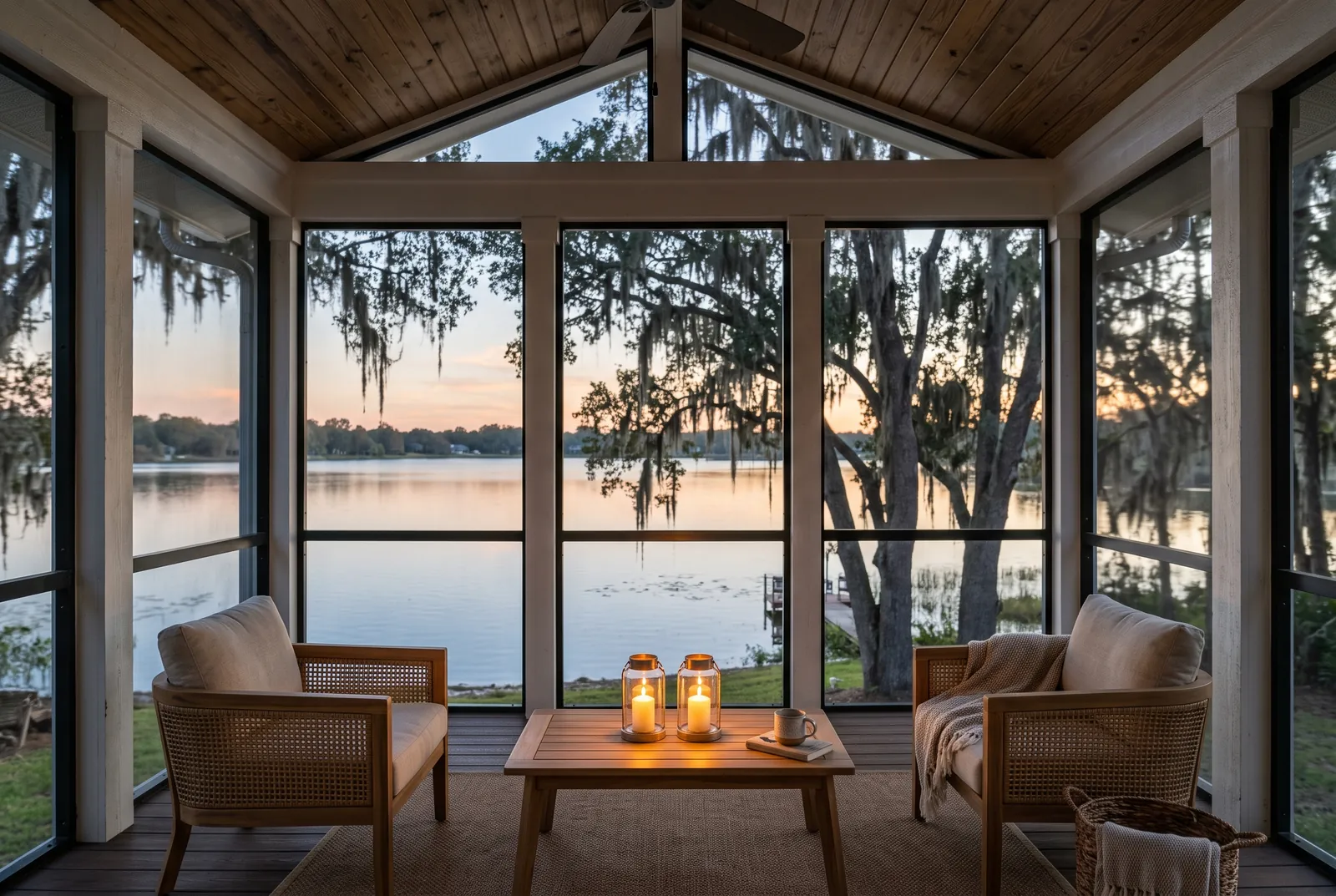
Somewhere along the way, a lot of Central Florida houses traded their screened porches for glassed-in rooms with air conditioning. It made sense on paper. It also took away the one room where you could hear the rain, feel the evening cool off and still not get bitten.
What a good porch has
- Depth. Twelve feet is the least you need for a table, chairs and a way around them. Fourteen is better.
- A ceiling worth looking at, ideally cypress or pine, and a fan that moves real air.
- Screens that disappear. Dark screen is easier to see through than silver, especially toward a view.
- Light you can turn down. Two lanterns on the table beat a ceiling fixture every time.
- Something living to look at: water, oaks, a garden. A porch that faces a fence is a hallway.
Ten minutes on a porch in a July storm explains this whole part of the world.
Where it goes
On the lake or garden side, open on three sides if you can. East and north porches stay coolest. A west porch is the most dramatic at sunset, but only with a deep roof, or summer afternoons will cook it.
How to use it
Coffee at first light. Dinner once the heat breaks. And the summer storm, which tends to roll in mid-afternoon, rains hard for half an hour and leaves the air washed clean.
Orange Blossom Hill in Mount Dora has the porch we would build if we could: deep, wrapped around three sides and pointed at the lake. Here it is in the morning and again after sunset.
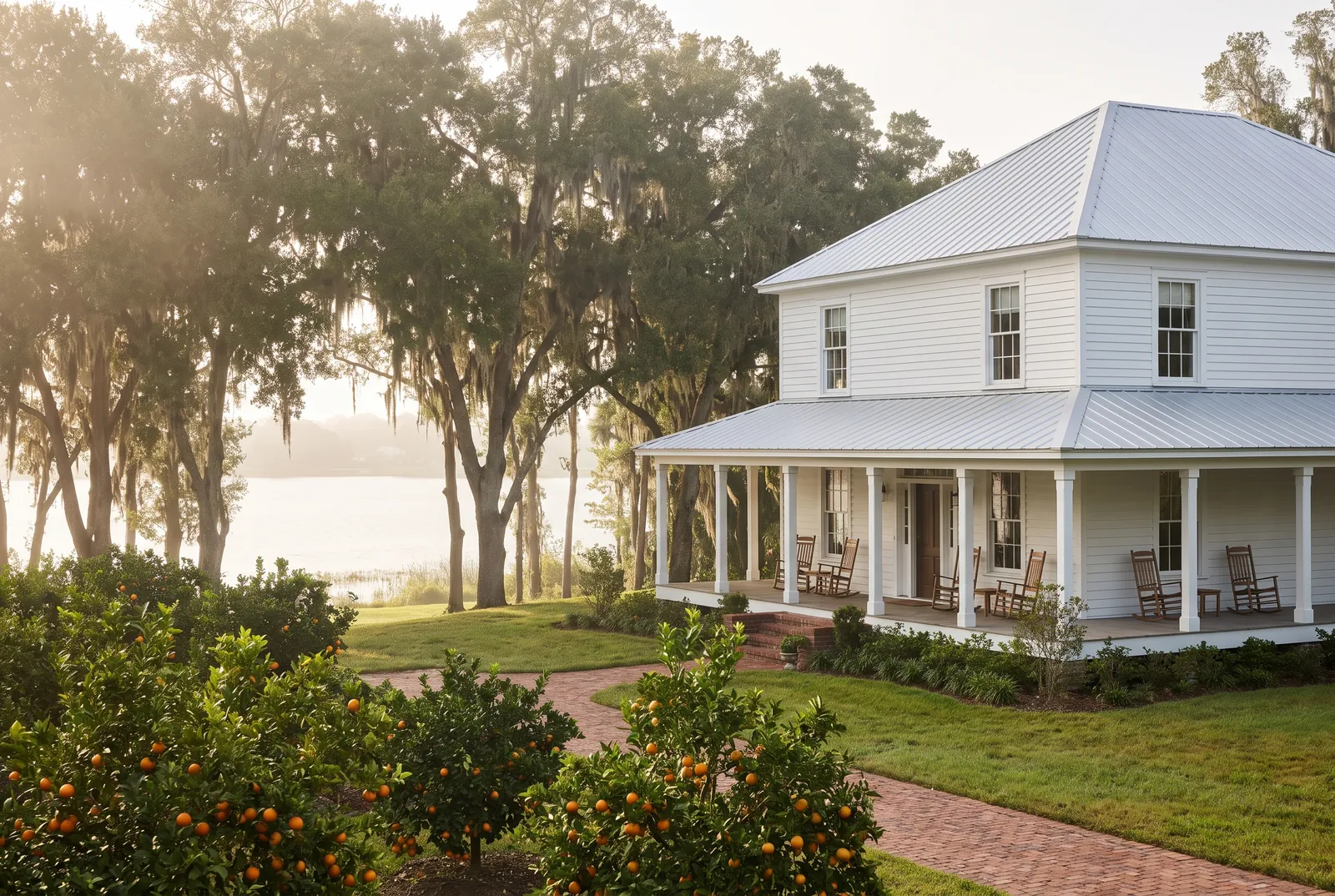
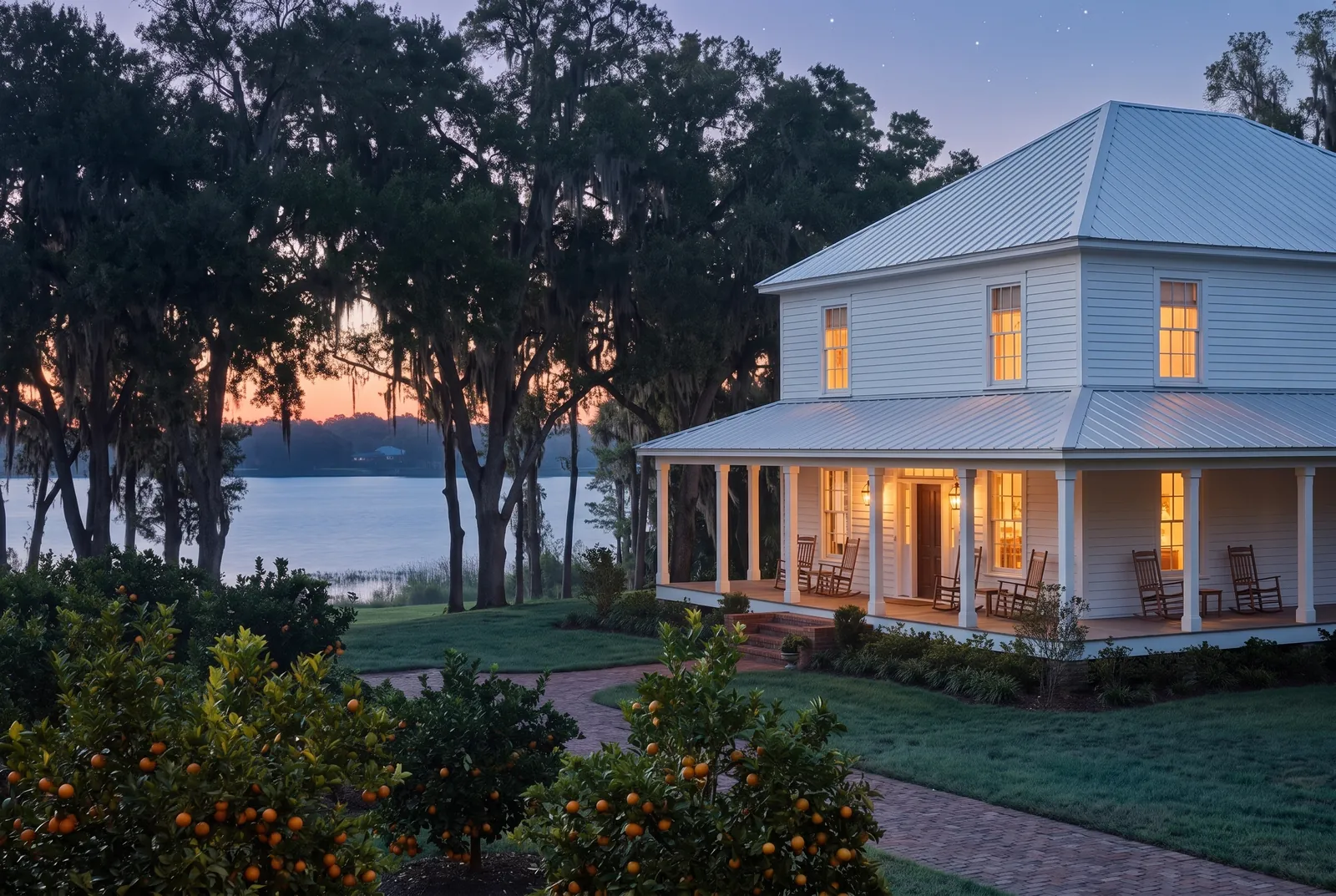
Orange Blossom Hill, Mount Dora. Drag the line, or use the arrow keys.
If a house you love has lost its porch, it can usually be given back. Ask us who does it well.